Episode 58: The Site is Right: Site Selection & Assemblage | Guest Bill Eshenbaugh, ALC
[music]
Welcome to the REALTORS® Land Institute Podcast, the Voice of land, the industry's leading land real estate organization.
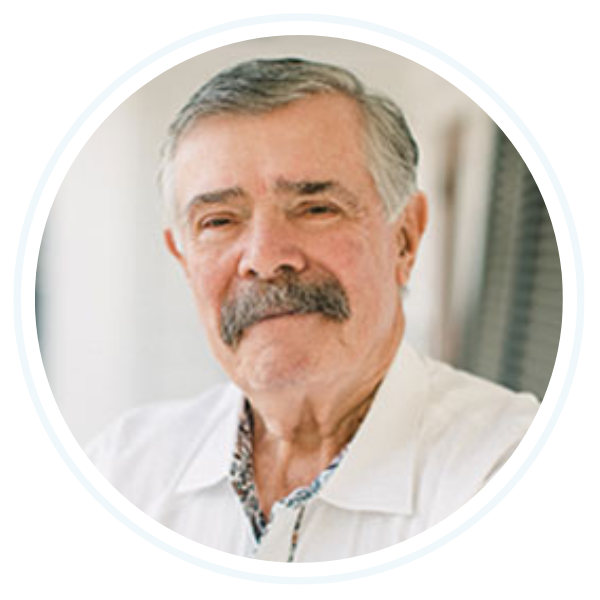
Justin Osborn: This is Justin Osborn with the Wells Group Real Estate Brokerage in Durango, Colorado. On today's episode of the Voices of Land podcast, we're talking with Bill Eschenbach, accredited land consultant and CCIM. Active in brokerage and land development in the Tampa Bay area for more than 35 years, Bill has weathered and prospered through several real estate cycles and has a keen ability to see and forecast trends ahead of the curve. Tenacity and a fervent passion for the business have earned him the nickname "The Dirt Dog." Bill is frequent industry speaker, teacher, and active board member of multiple associations. He's been honored with numerous Broker of the Year and Top Producer Awards over his 35 plus year career. He was recently inducted into the National Educator Hall of Fame from RLI, having co-authored and taught multiple courses for the Realtors Land Institute. This year, Bill took home the first ever CCIM Dealmakers Specialty Award at a CCIM fall forum in Vancouver, Canada. Welcome to the podcast Bill.
Bill Eshenbaugh: It's great to be alive. It's great to be on the podcast with you this morning Justin. Good to see you.
JO: Good to see you too Bill. I think the last time I saw you was at National Land Conference in Tucson and man, we sure had a lot of fun out there.
BE: It's always a pleasure. I love being around my ROI friends and family.
JO: Well, you got a wealth of knowledge and I'm looking forward to picking your brain here over the next 20 or 30 minutes. So we talk about site selection and overview of the site selection process and kind of what comes to my mind when I do that, when I'm sitting down with clients is what's really the highest and best use for this property? And so is that kind of what comes to your mind when you start this process? Or maybe back me up and let's start from the beginning?
BE: Well we start, I actually co-authored the site selection course for ROI years ago. And one of the premises was every site is either a site in search of a user or it's a user in search of a site, thinking about how that works. So I try to put my hat on, if I'm a user looking at a particular property, what do I want to put on that property? And if I'm a seller, of course I want to get maximum return, what's the best use on my property? So we try to balance between those two, look at it within the boundaries of local government primarily what can we zone it for? What's the future land use? What's the highest best use of this property? So we try to put those hats on and look both directions, either as a user or as a seller. How do we maximize this deal and find a happy buyer?
JO: Are there any AI tools or algorithms that you and your team rely on to help you with this? Or is it mostly just your years of experience that you have under your belt?
BE: We used to rely on the experience and the eyeball and driving around and looking at making notes on the yellow pad. But today's world is so sophisticated with mapping and demographics. When I was in Vancouver, for example, using a combination of AI and the site to do business, which is a CCI site, it was unbelievable how they picked a site in a city and said, this could be a Starbucks, tell us the story. And in two minutes on the screen populates, how many people would walk there? How much did we pay for coffee? It's just unbelievable. And the competition and other than Starbucks who might be there. So the world we live in of AI is incredibly helpful site selection.
JO: Man. That's great. And so is that specific through the CCIM platform that you have an AI tool that will give you traffic count, foot traffic, all that type of stuff? Or is this something that's open to the public?
BE: Yeah, I don't know. I don't remember their qualifications on using sites to do business. I just used that as an example. But I've got a young guy here, does nothing but research for us, and he's got all kind of tools. There's a lot of tools available beyond just being as the CCIM thing. I just use that as an example, but my young research team here could probably find your social security number before you could find it. There's just so much information available and so much access available out there to demographics, to utilities, to traffic counts, wetlands, uplands I mean it's just... Eagle Nest. One of the things that we find really interesting about AI, most of the ranchers here in Florida who have to file a water permit on their property. They don't like to give out their cell number or their email address.
They don't even like to have them probably, but they don't like to give them out. We found just go look at the water management district's records, find that ranch, you're gonna find an email address, a phone number, you know how to find these people. So there's just so many ways to get there. I used to have to go out to the gate and hope somebody not shoot me before I got to the ranch house when I went to meet a rancher. Don't have to do that today. My young guys are really adept at that research.
JO: Well other than AI, what are some of the just most significant changes that you've seen from when you wrote your course topic back in the 1990s?
BE: Well in the 1990s, a marketing package had a 7/11 map in there, and it had a plat book that I flopped over on top of the copier and tried to find the property flat and show it in my book. And I think by the '90s I actually had word perfect working on my word processor. But today, just the ability to pull aerials off of government records and all those kinds of things to tell a story quickly. And we use a couple programs. We use one called Build Out, Build Out will help us put together our proposals and we can go in and pull a lot of comps of land sales around us to pull into it. And then it just populates it in this table of seven comps, how many acres, when did it sell how many units and what did it sell per unit?
It's unbelievable what we can find, versus in the 1990s, I had to call five appraisers and see if anyone would give me comps, for example, or go back and look at one of my files somewhere. Yeah, I think I sold up on 54 for $2 million. What was that deal? So it's just so much better in being able to be knowledgeable. And the other thing I've found too is, we have to compete with our clients these days. Our clients are hiring smart, maybe MBAs or young people doing some of the same research in their offices or home builders or retailers have a lot of data available to them without a broker. So we've got to be able to bring something all together to take to somebody and say, "Hey, here's why you need a broker. You got a young analyst, but here's what we know about the market beyond just what they can find." So it's a lot of shoe leather work as well as using this old fashioned as well as all this technology together to be top of the market.
JO: So is Florida a public open record state?
BE: Yes, we are.
JO: Okay. Man that makes it so much easier, and Colorado is as well. But I know I was talking with some of our RLI associates up in Montana and I mean, it's like pulling teeth, trying to get any information up there where they still have to do exactly what you were talking about that you were doing in the '90s, where they have to call these different appraisers and they're having to call other real estate brokers trying to get comps, 'cause it's a closed record state. And so they just have so much time and energy spent on the same stuff that you and I can get access to in 30 minutes, it takes them three days.
BE: Well one of the things that I started doing years ago, I realized that appraisers find most brokers don't return their phone calls and said, "Wow, well, I'll return their phone calls, I'm gonna trade them, I'm gonna give the one comp, but they're gonna give me back four or five that they're gonna find on whatever they're working on." So the old story, would you trade a dollar for a quarter or a quarter for a dollar? Yeah. So we have four or five appraisers that when we have a closing, we send them all the information we can send them plus our original marketing package, so they can see where we started and where we ended up. And so when I need something from them on something I don't have a lot of good data on, like on retail corners, maybe I'll send an email to three appraisers at 6 o'clock in the morning and I can tell you that by 9 o'clock I'll have three responses because we feed them. Which is really something I would share, go out and do that. Cultivate your appraisers because they don't hear from any of you, they love to hear from brokers and if you respond to them, they're like a puppy dog, man, they'll bring that bone back to you every time.
JO: Yeah, it all goes full circle, that's definitely something I talk about in the Land 101 class when I'm teaching it is, we go through the list of all the people that can be involved in a transaction from the title company to the surveyors, to the appraisers, to the engineers, septic inspectors, etcetera. And we go through that list and just talk about how much influence all of them can have in a transaction. And the one thing I point out is exactly what you said when the appraisers call and they want to pick your brain on other cells, man, call them back first because it all comes full circle when you need information from them, they're gonna remember that you were one of the only realtors that called them back and helped them out in their time of need.
BE: Yep, yeah. Thanks for doing that.
JO: Yeah, it's kind of crazy that we to have to talk about just returning phone calls that so many people don't do it, but man, it'll separate you from your competition for sure. So I got a question for you, Bill. Out here where I'm at, we've got a lot of transitional land where we're actually changing the zoning and it takes quite a while. Are you dealing with any of that out in Florida?
BE: We deal with it every day. I just came from a ULI breakfast stimuli meeting that they call it, where it had a builder panel and the biggest lament from two developers and a home builder where the process used to take four to eight months to get something zoned another four to eight months to get permits. Now it's 12, 18, 24, 36 months. I just signed a contract yesterday, we're expecting to take 36 months, 'cause we're in a very difficult environment. We have a new kind of commission that doesn't like development. We've anticipated, in the contract we're gonna be 36 months to close it. So yeah, the process is arduous and it's getting worse. As the world grows and more people move into wherever you are, you have people coming in your market from California, we've got them coming from New York here no matter why they left there, they come here and the first thing that they don't want more people behind them close the door behind me. I'm sure you're seeing it in Durango. Close the door behind me. The last guy I moved in is the first guy doesn't want anybody else to come there.
JO: Yeah, we definitely get a lot of the nimbyism where they say not in my backyard, but they're all transplants from somewhere. There's very few third, fourth generations here in southwest Colorado, it's all transplants from somewhere. But hey, I'm one of them as well. I grew up in Texas, moved here in the '90s and so it's kind of a melting pot, I love it.
BE: I can't complain. I came from Pennsylvania 40 years ago, so yeah, I'm part of the problem.
JO: Bill, let's talk about your designations. I can think of maybe one other person that has been on the podcast that had both an ALC and a CCIM. That's pretty rare. So talk about kind of that process and how it's helped you become the expert that you are in your area.
BE: Well, I had a CCIM president here in Tampa. A woman by the name of Cynthia Shelton put the hook in me about 1994 and said, you got to get in the program. And I had met some CCIM when I ran the sales center for the RTC. So I started, got in a program, I went to a national meeting. But when I was there, I met a couple of people in the land side of the business. I said, "I kind of like these RLI people." And I came back home and I was assessing it, my competition for commercial with all CCIMs and I kept losing deals to an A LC here in this market. So I found a guy down in Fort Myers, Florida named Chuck Bundschu and Chuck had both, and he was 20 years my senior. So I called him up, I said, "Mr. Bundschu can I buy you lunch?"
He said, "Sure, anybody can buy me lunch. Yeah." So I drove down a couple hours to see him and we sat down over lunch and I said, "Tell me a little about yourself." First of all, he was a... He said, I went to shore at Normandy without a gun. And I said, "Well, that's kind of crazy." He said, "Hey, I was a photographer." And I said, "I was a photographer all the way to Berlin." So I said to myself, I'm dealing with a real tough guy here. This guy traveled all the way across Germany without a gun during World War II, he's somebody I wanna know. And I said, I told him my dilemma, and he said, well, get them both, I have them both. And I said, that's why I came to you.
I said, "Why do you have them?" He said, "'cause I make money with them." I said, son. I said, "Wow." So I came back and in about eight, I don't know, less than 18 months, 12 months, 15 months, I jumped in the pool on both ends and I went after both designation and it got them both about the same time. And so I said, well, you know what, this is good stuff that I learned from both designations. I offered a 3% commission increase to anybody who went to work for me and got both designations when they got them on their shoulder. And that worked for four or five years. So I think I'm sort of the godfather in Florida that we have about maybe 30 or so today that have both designations. Our past recent president, Dean Saunders has both of them, for example.
So we found them. And in my shop, you're gonna have both of them or you're not gonna be here forever. And we're 10 of us five, have ALCS five CCIMs, a little bit overlap, a couple guys still working on the programs. But our goal is to, everybody have both designations. And I'll tell you why I think number one, I made more money once I had them, which is while we're in this business mostly. But secondly I competed here in Florida against the big firms, the JLLs, that course runs the CBREs or everywhere. There's a glass ceiling. There are assignments I'm never gonna get because it's big corporate company assignment to a big corporate real estate brokerage firm, I'm never gonna get those. But I want my glass ceiling to be yards and yards above the normal competition here. And I think we raise the bar with those two designations that our glass ceiling is much higher than it would be without it, I think it helps us be maybe the dominant land firm in our market, which is a really strong market in Tampa. But a lot of people come to us because we have both those designations, I believe. And it just helps us do a better job, I believe.
JO: Man that's great. I totally agree. I think that's great advice for our newer realtors that are listening to say, all right, this is a way to really raise the bar, raise the standards from your competition. And when you go on those listing appointments and you have those designations after your name there's gonna be very few people that are gonna have that in your state. I think, Bill, you said what, 30 in the whole state of Florida have that?
BE: Somewhere around 30. Yeah, it's kind of, we've sort leveled off there, I think it's about the same. Texas always has more than anybody, right? So I'll give them credit. They got a couple more than we do maybe, I'm not sure.
JO: Well, folks, a great way to start this process towards the designations is to consider taking the site selection course through LANDU, LANDU has designated courses that will help you confidently advise clients across a variety of land real estate topics. And we have virtual courses open for registration now@rliland.com. Bill, tell me about this book you wrote. I heard through the grapevine that you got a new book that just came out.
BE: I do. And you're on my list now today to send you the absolute gateway to get one. It's a family story. It goes back to my great-grandfather's service in the Civil War. He was in the 14th Pennsylvania Calvary. He spent three years in the Shenandoah Valley. So the name of the book is Up to Shenandoah. It's a little bit a play on words because Shenandoah is one of the few rivers that flows north. And the object of the Union Army was to go up to Shenandoah or go south and take Richmond. And so the battles are all real places in real times. Everything else is because it's a fictional story, my imagination of what got him there, what happened in some of those events, his son joining him on the Battlefronts and what's happening back on the farm, back home in Pennsylvania with his wife and kids.
So it's a lot of fiction. People tell me that, so far that have read it have going, "Wow, you captured the essence of a team of horses going down the road. Or I could smell the bushel potatoes as your protagonist was selling potatoes at a market somewhere." So it's just good feedback in every regard. We made, I think on Amazon, the number one seller for the day, the day we launched. And we were, I think we're on 8th best in fictional history bestsellers right now. So real happy with it. It's called Up to Shenandoah. I'm gonna give you a shameless plug, it's on Amazon. Look up my name or look up the name of the book, and you can order as many copies for your clients for Christmas as you want, and get in there before Black Friday and buy them. How's that? [laughter] Can't be much more shameless than that. Can I?
JO: I love it, man. You are definitely a man of many talents. So yeah, I look forward to reading that. That's awesome, Bill.
BE: My pleasure.
JO: Well anything else for our listeners Bill, as we're starting to wrap up here?
BE: Well, I think the, going back to site selection for a moment, when you've mastered some of the things they need, think about who your audience is. If you're working with a retailer and they get... You got to think, put yourself in a retail site selector shoes or the home builders site selector shoes. They're getting inundated with information from all of us that are realtors, right? We're just blasting them out. Homeowners and landowners and everybody else are putting stuff in front. So by taking site selection, you raise the odds. I used to say, you raise the odds back in the day when you got your package off their credenza and onto the front of the site selector. Now I'll say, you get it out of junk mail or their inbox to something that next time I go to Tampa, I gotta look at this site because this broker knows what they're doing and they have shared compelling information about their site, then I ought to take a look at it.
So that's what I think site selection helps you do. It helps you get to yes or helps you get to early, no, whichever you want, but it helps you get through the process because that person on the other end looks at it and goes, "Oh, this REALTOR, this ALC or this land ROI member sent me something that has some meat to it. It's not all just fluff." It doesn't say utilities are nearby. It says utilities are 100 feet away. So that kind of information that you learn to present to them moves your site up the cycle, moves your site to, I really wanna see this one versus, "Oh God, I got another 100 of these to look at."
JO: Man that's great input. I think that that's one of the things that a lot of folks kinda lose is they plug the topics into AI and see what spits out, and then they upload it to their marketing. But the more specific you can be with actual facts, like you're saying Bill, don't tell me it's nearby, tell me exactly how many feet it is. Tell me the size of the waterline. Am I gonna have to expand it? Are there taps available? All those things that go into development. I love what you said Bill, about maybe it's not a yes, maybe it's an early no. And if you can save your client tens of thousands, hundreds of thousands of dollars in due diligence by realizing early on that, no, this is not the right property for this development, then that's gonna really make you look good.
BE: My saying in class was, "If I'm not gonna get paid, let's not get paid upfront." Make it quick on that regard. And I think that's... You mentioned AI. I did a presentation two days ago to people who are my contemporaries, meaning they're older than me in their '80s, one's in his early '90s. I've sold stuff for them before. We got two big properties, I did a send up two and a half hour presentation. One of the things that stood up for them, and I said, or stood out for them, I said to them, yeah, our firm embraces AI. Our young guys use AI, meaning the small A, small I for artificial intelligence. We also still use AI, meaning actual intelligence. They love that comment. [laughter]
JO: I love it. I love it. That's great. Well Bill, thank you for joining us today. If our listeners wanted to get in touch with you, what's the best way for them to do that?
BE: My email is bill@thedirtdog.com. That's Bill at T-H-E-D-I-R-T-D-O g.com. Love to hear from you. If you have questions that you go into this whole thing, shoot me an email, I try and respond to all my emails and get back to you with some answer, some direction that can help you.
JO: That's great, man. Thank you for sharing it. And folks, for more expertise on land real estate topics, be sure to check out the RLI blog, follow us on social media, and of course, tune in for upcoming episodes of the Voices of Land Podcast.
[music]